Paternity DNA Test for Peace of Mind: Get Clear Answers with Reliable DNA Testing
When questions about biological fatherhood create uncertainty, getting a clear and reliable answer can bring emotional relief. A paternity DNA test for peace of mind is a private way to establish whether a man is the biological father of a child using advanced DNA analysis.
At EVIDEXA DNA Test Solution Pvt Ltd, we provide confidential paternity DNA testing services designed to help individuals and families obtain scientifically supported answers. Our testing process focuses on accuracy, privacy, professional sample handling, and clear reporting.
What Is a Paternity DNA Test?
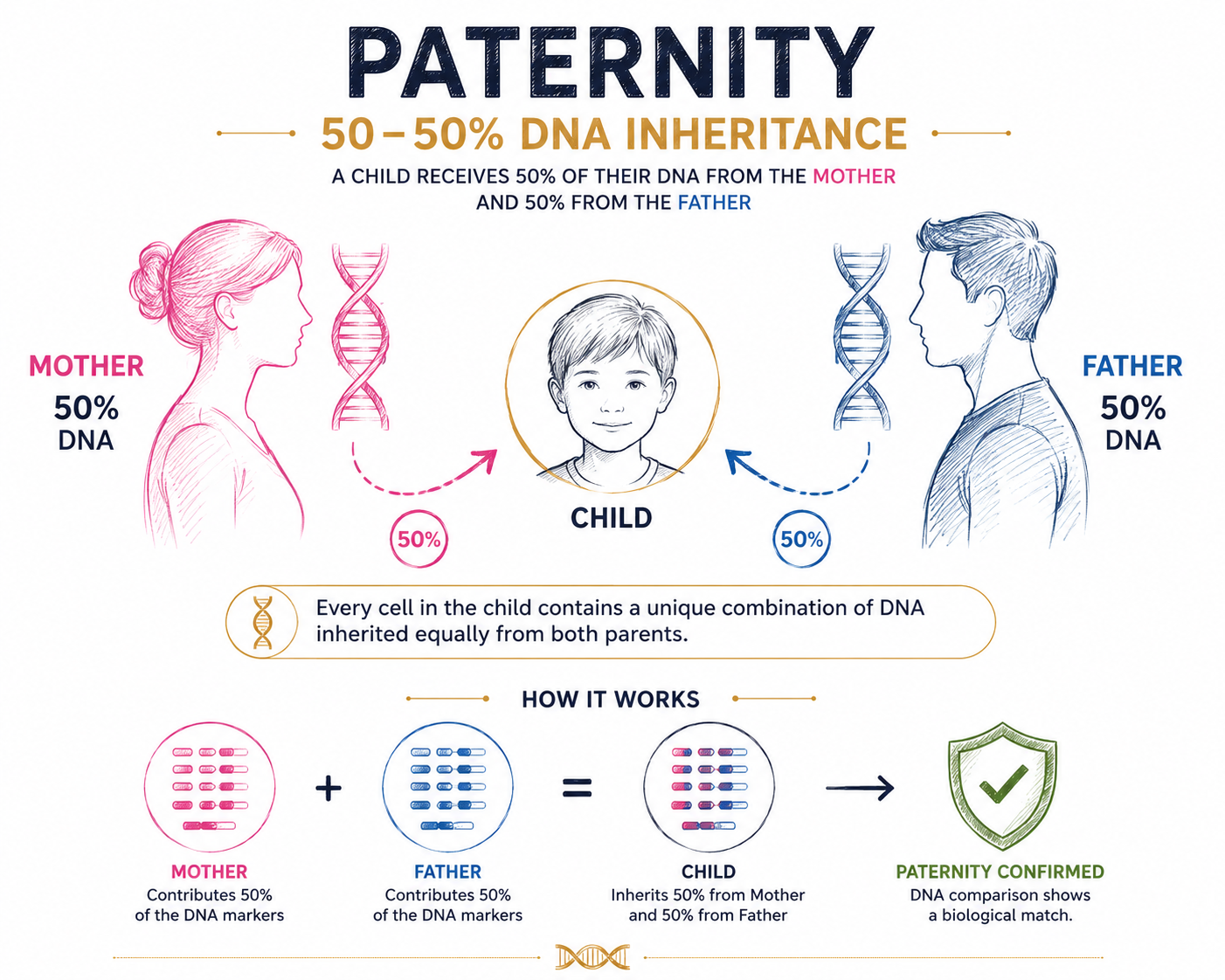
A paternity DNA test compares specific genetic markers from the child and the alleged biological father. Because a child inherits genetic material from both biological parents, the child’s DNA profile can be compared with the alleged father’s profile to determine whether the genetic evidence supports biological paternity.
Modern DNA testing can provide a highly reliable answer without requiring complicated procedures. In many cases, a simple buccal swab collected from the inside of the cheek is sufficient for DNA analysis.
For a peace-of-mind test, the objective is generally to obtain a private answer for personal knowledge rather than to use the result for court proceedings or official documentation.
Why Do People Choose a Paternity DNA Test for Peace of Mind?
Family relationships can sometimes involve uncertainty, unanswered questions, or concerns that are difficult to discuss openly. Continuing to live with uncertainty can be emotionally challenging.
A private paternity DNA test may help provide clarity when people want to know the biological relationship without immediately entering into a legal process.
Common reasons include:
- Confirming biological paternity for personal reassurance
- Resolving doubts about a biological relationship
- Understanding family relationships
- Providing clarity for parents and families
- Making informed personal decisions
- Replacing uncertainty with scientifically supported information
- The purpose is not to create conflict. For many people, it is simply about knowing the truth and moving forward with greater peace of mind.
How Does a Paternity DNA Test Work?
The process is straightforward.
1. Consultation
The process begins with a discussion about your testing requirements. You can ask questions about the type of test, sample collection, confidentiality, reporting, and whether you require a peace-of-mind or legal test.
2. DNA Sample Collection
DNA is commonly collected using a buccal swab from the inside of the cheek. The procedure is quick and non-invasive.
Depending on the circumstances, appropriate DNA samples may be collected from the child and alleged father.
3. Laboratory DNA Analysis
The collected samples are processed using established forensic DNA testing procedures. Multiple genetic markers are examined to compare the DNA profiles.
The genetic information inherited from biological parents provides the scientific basis for relationship testing.
4. DNA Profile Comparison
The child’s DNA profile is compared with the alleged father’s profile. The laboratory evaluates whether the genetic markers are consistent with biological paternity.
5. Confidential Report
After analysis and review, the test result is provided in a confidential report explaining the outcome of the DNA comparison.
How Accurate Is a Paternity DNA Test?
A properly conducted paternity DNA test can provide a very high level of statistical confidence when the tested individuals are correctly identified and appropriate DNA markers are analyzed.
At EVIDEXA DNA Test Solution Pvt Ltd, our paternity testing approach uses 30+ STR
markers, including core markers associated with major forensic DNA databases such as CODIS and NDNAD.
The larger the number of informative genetic markers examined, the more comprehensive the DNA comparison can be.
However, accuracy depends not only on laboratory analysis but also on factors such as proper sample collection, identification, chain of custody where applicable, and laboratory quality procedures.
Peace-of-Mind DNA Test vs. Legal Paternity DNA Test
One important consideration is the intended use of your DNA test.
Peace-of-Mind Paternity DNA Test
A peace-of-mind test is intended primarily for personal knowledge. It can be suitable
when you want to understand a biological relationship privately and do not need the result for court or official proceedings.
The sample collection process may be arranged for convenience, depending on the testing requirements.
Legal Paternity DNA Test
A legal paternity DNA test is designed for situations where the DNA report may need to be submitted to a court, immigration authority, government department, or another official organization.
Legal testing generally requires controlled sample collection, identity verification, documentation, and appropriate chain-of-custody procedures.
If you believe your result may later be required for legal, immigration, or official
purposes, tell the testing provider before collecting samples. The correct test type should be selected from the beginning.
What Samples Are Used for Paternity DNA Testing?
The most common sample for a paternity DNA test is a buccal cheek swab.
A cheek swab is popular because it is:
- Simple to collect
- Non-invasive
- Convenient
- Suitable for DNA profiling
Comfortable for children and adults
In special circumstances, other biological materials may also contain usable DNA. However, the appropriate sample type depends on the case and should be discussed with the testing laboratory.
Is a Paternity DNA Test Confidential?
Privacy is an important consideration when dealing with sensitive family questions.
A professional DNA testing service should have procedures for protecting personal information, DNA samples, test results, and client communications.
At EVIDEXA DNA Test Solution Pvt Ltd, confidentiality is an important part of our testing process. We understand that a paternity question can be deeply personal, and clients deserve a professional environment in which their information is handled responsibly.
Can a Paternity DNA Test Be Done Without a Court Case?
Yes. A court case is not required simply to obtain a private paternity DNA test.
If your purpose is personal reassurance, you may choose a peace-of-mind paternity DNA test rather than a legal test.
However, if there is any possibility that the result will be required for a legal dispute, immigration application, inheritance matter, or other official purpose, it is important
to request the appropriate legal testing procedure before samples are collected.
When Is a Paternity DNA Test Worth Considering?
There is no single reason why someone chooses DNA testing. Every family situation is different.
A paternity DNA test may be considered when:
There is uncertainty regarding biological fatherhood.
A parent wants personal confirmation.
Family circumstances have created unanswered questions.
Someone wants reliable scientific information rather than assumptions.
- The parties want to understand their biological relationship privately.
DNA testing should be approached thoughtfully, particularly when the result could have significant emotional consequences for family members.
What Happens After the DNA Test?
Receiving the result may provide the clarity you were looking for, but it can also bring strong emotions.
If the result confirms biological paternity, it may provide reassurance and help resolve long-standing doubts.
If the result excludes biological paternity, it may raise additional emotional, family, or legal questions.
For this reason, it is important to approach DNA testing as a scientific process that
provides information—not as a tool for making assumptions about someone’s character, intentions, or family relationships.
Why Choose EVIDEXA DNA TEST SOLUTION PVT LTD?
Choosing the right DNA testing provider is important when the result may affect important personal decisions.
EVIDEXA DNA Test Solution Pvt Ltd focuses on professional DNA testing services with an emphasis on:
30+ STR marker analysis
Comprehensive DNA profile comparison
Confidential testing
Professional forensic DNA analysis
- Experienced forensic scientists
- Clear and understandable reporting
- PAN India sample collection support
- Peace-of-mind and legal DNA testing options
- Support from consultation through reporting
Our objective is simple: to help clients obtain reliable scientific information while treating every case with professionalism and confidentiality.
Paternity DNA Testing in India
If you are searching for a paternity DNA test in India, it is important to choose a testing service that clearly explains the difference between private and legal testing.
Before ordering a test, consider:
Why do you need the test?
Is the result only for personal knowledge?
- Could you need the result for court or immigration later?
- Who needs to provide samples?
- How will the samples be collected?
- What type of report will you receive?
- How will your personal information be protected?
Understanding these questions beforehand can help you choose the appropriate testing process.
Frequently Asked Questions About Paternity DNA Tests
Is a paternity DNA test painful?
No. A standard buccal DNA sample is collected by gently rubbing a swab against the inside of the cheek. It is a non-invasive process.
How long does a paternity DNA test take?
The turnaround time depends on the selected testing service, sample collection process, laboratory workflow, and whether expedited reporting is requested. Ask the testing provider for the current expected reporting time before placing your order.
Can a child undergo a paternity DNA test?
Yes. Children can generally provide a buccal cheek swab for DNA testing. The exact requirements depend on the testing process and the individuals being tested.
Can a paternity test be done for peace of mind?
Yes. A private paternity DNA test can be performed when the primary purpose is personal knowledge rather than legal or official use.
Is a peace-of-mind DNA test the same as a legal DNA test?
No. The scientific DNA analysis may be similar, but the sample collection and identification procedures can differ. A legal test requires procedures designed to establish identity and maintain chain of custody.
Can I use a peace-of-mind DNA test in court?
A private peace-of-mind test may not meet the evidentiary requirements of a court or government authority. If you need a result for legal purposes, request a legal DNA test from the beginning.
What is the most common sample for a paternity DNA test?
A buccal cheek swab is the most common sample because it is convenient, painless, and provides DNA suitable for laboratory analysis.
Is DNA testing confidential?
Professional DNA testing services should have procedures for protecting client information and test results. Always ask the provider about its privacy and sample-handling practices.
Get Clarity. Get Peace of Mind.
Questions about biological relationships can remain in your thoughts for a long time. Guesswork and assumptions rarely provide the certainty that scientific testing can offer.
A paternity DNA test for peace of mind can provide scientifically supported information about biological fatherhood, helping you replace uncertainty with clarity.
If you are considering a paternity DNA test in India, EVIDEXA DNA Test Solution Pvt Ltd can help you understand the available testing options and guide you toward the appropriate procedure.
When the question matters, get an answer based on DNA—not assumptions.